Hi everyone!
I’m Becky Gaskell, a futures day trader, trading psychology coach, and founder/host of the Market Mamas Trader Psychology Podcast. I’m also excited to be joining the NinjaTrader Ecosystem as an approved vendor!
I’ve spent the past several years trading futures and exploring something I believe deserves just as much attention as our charts and strategies: the psychology behind our trading decisions.
Through Market Mamas, I interview experienced traders and industry professionals and share practical conversations about discipline, emotional regulation, risk management, and developing sustainable trading habits. Because these conversations have been the most transformational for me, I am so grateful to be able to host them every week!
One thing I’ve learned is that knowing what to do and consistently executing it are two very different skills.
I’d love to hear from this community: What’s been your biggest psychological challenge in futures trading?
Is it patience? Overtrading? Cutting losses? Holding winners? DCA? Or something else entirely?
I’m looking forward to connecting with fellow traders, learning from your experiences, and contributing to the community!
Becky
Founder & Host | Market Mamas
Educational content only. Futures trading involves substantial risk.
Holding losers and cutting winners. I’d take profit fast because I didn’t want a green trade to turn red, then sit in a red trade waiting for it to come back. My entries were mostly fine. The money was leaving on the exits. What helped was putting the stop in the market as soon as I’m filled, so getting out of a loser isn’t a decision I make in the moment. I also started checking how long I held each winner against each loser, because that gap told me more than my win rate did.
Thanks for sharing this so openly. That urge to protect a green trade while giving a red one more room is so relatable. Same trader, completely different relationship with the risk!
Your point about comparing how long you held winners versus losers really stood out. That’s a useful journal question that a win rate alone won’t answer. And putting the stop in immediately gives your plan a voice before the emotions get louder.
These are the kinds of honest conversations I love having on Market Mamas. Have you found that trusting your winners has gotten easier as you’ve become more consistent with your stops?
I have two head problems, entries and fear of losing.
My biggest hurdle is “the fear of losing” creeping into my head every so often. Like now!
I don’t know how it gets there, but it does. Open a trade, bring the stop to +10 almost immediately. Follow the price, choking the trade, not giving it room to move.
1 Like
@Bruce_Tharp The immediate move to +10 gives you one specific habit to test. In replay or simulation, compare the same entries with two exit rules: your current early move, and a stop adjustment triggered only by the condition you wrote down before entry. Keep the initial stop, target and position size identical.
Record when you moved the stop, what price had done at that point, and whether the original stop or target was reached later. Include costs. That separates “I felt safer” from what the change actually did to those trades. A small sample is a way to find a pattern, not proof that either exit is better.
When you move to +10, is there a price condition behind it, or does it happen as soon as the trade is green?
2 Likes
Bruce, that urge to protect a trade almost immediately is so relatable. I’ve definitely worked through this too! You’ve already noticed the pattern: the fear shows up, the stop moves, and the trade loses its room to breathe.
One question I find useful is: “Am I moving my stop because something changed on the chart, or because I’m uncomfortable?”
Having a clear plan for when to adjust the stop can give you something concrete to return to when that fear gets loud. And deep breaths when we are in a trade is so valuable too.
Does it feel stronger after a losing trade, or is it there even on your first trade of the day?
Really appreciate this thoughtful response. That distinction between “I felt safer” and what the adjustment actually did to the trade is so valuable.
The replay approach also gives Bruce a way to explore the habit without putting more money on the line. I’d add a quick note about what he was feeling when he moved the stop - urgency, relief, fear of giving back profit. Pairing that with the trade data could help him recognize what’s triggering the decision.
Thanks for adding such a practical way to work through this. I love this community here!
That note would be useful, Becky. I’d record it at the moment of the stop change, before seeing how the trade ends. Otherwise a winner can make the same decision feel sensible and a loser make it feel reckless.
A short entry could be: time, old stop, new stop, planned trigger, and one emotion word. Keep the original exit rule alongside it. That gives the replay comparison a record of the decision instead of an explanation written afterwards.
When you review this with traders, do they usually capture that feeling during the trade or reconstruct it later?
1 Like
It has, mostly because the stop being in already takes the worst case off the table, so letting a winner run doesn’t feel like gambling with money I already had. The hold-time check keeps me honest too. When my winners start getting shorter than my losers again, that’s usually the first sign I’m trading scared, before it ever shows up in the P&L.
NOTE: I’m reading these posts/replies from all of you.
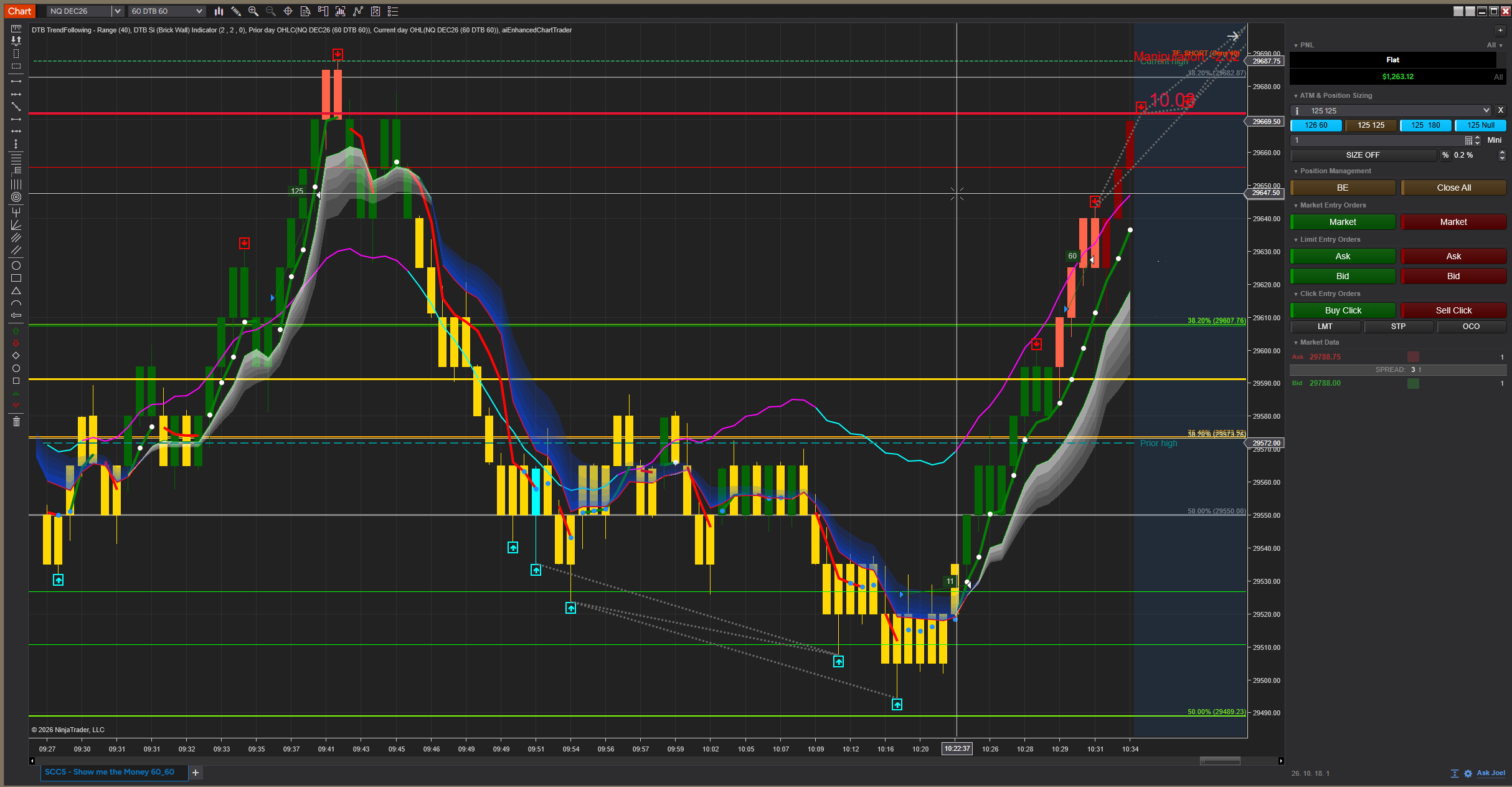
There really is no testing needed. I just do it out of fear and a physical problem. There is no explanation other than a fear of losing. Losing a NQx1 won’t hurt my account much. My normal entry is 1-NQ, 125 Tick SL, and a 60, 125, 180, or no TP. They are mostly no TP.
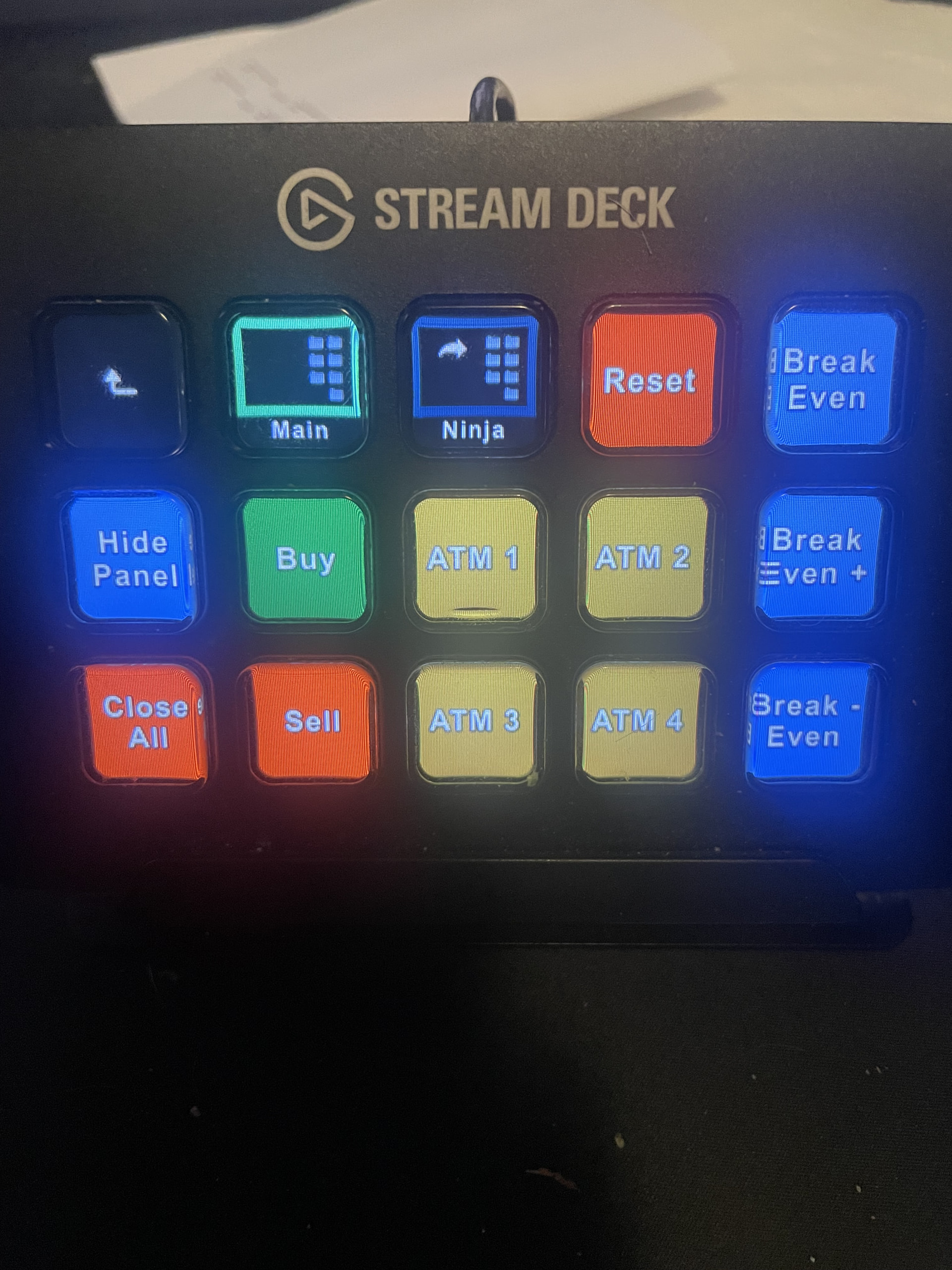
Part of the problem might be late entries. I’m working on that and may have a fix. The late entries are purely physical, not mental blocks. The physical problem is familial hand tremors, especially with pressure or small objects. I enter the trade, and the tremors really kick in. It’s bad enough I worry I couldn’t click the close button if needed. I think a Stream Deck could fix that; pushing a button I don’t have to hold might ease the problem. That doesn’t answer the moving of the stop.
Moving the stop is frustrating. A full 80% of the time, the trade would work if I didn’t choke it to death.
1 Like
I think very few traders record their experience in real time, but I agree, that personal feedback is very valuable. Any way that we can lock into our personal triggers and emotional responses with the aim to pivot to better choices, this is a great bit of information. I love this point!
Definitely two kind of separate factors to this topic. Both worth intentional managing. Goodness those tremors sound frustrating, I am sorry you have to work through that! The buttons could be very helpful indeed.
And, about “choking the trade to death” - such a clear image of what tightening a stop really can do to a trade. Feels protective when we are in those moments. But often it isn’t as helpful as it seems. The more awareness we have on it though, the sooner we might catch it in real time!
Bruce, for the tremor side, NinjaTrader lets you assign order actions to keyboard hot keys under Tools > Hot Keys, including flattening your position. A Stream Deck can send those keystrokes, so one press gets you out with no mouse aim involved. On the stop, if 80% of the trades you choke would have worked, you can take that decision out of your hands too. Set Auto Breakeven in your ATM template with a profit trigger you pick ahead of time, then leave the stop alone. That way it only moves when price reaches a level you chose before the fear showed up.
1 Like
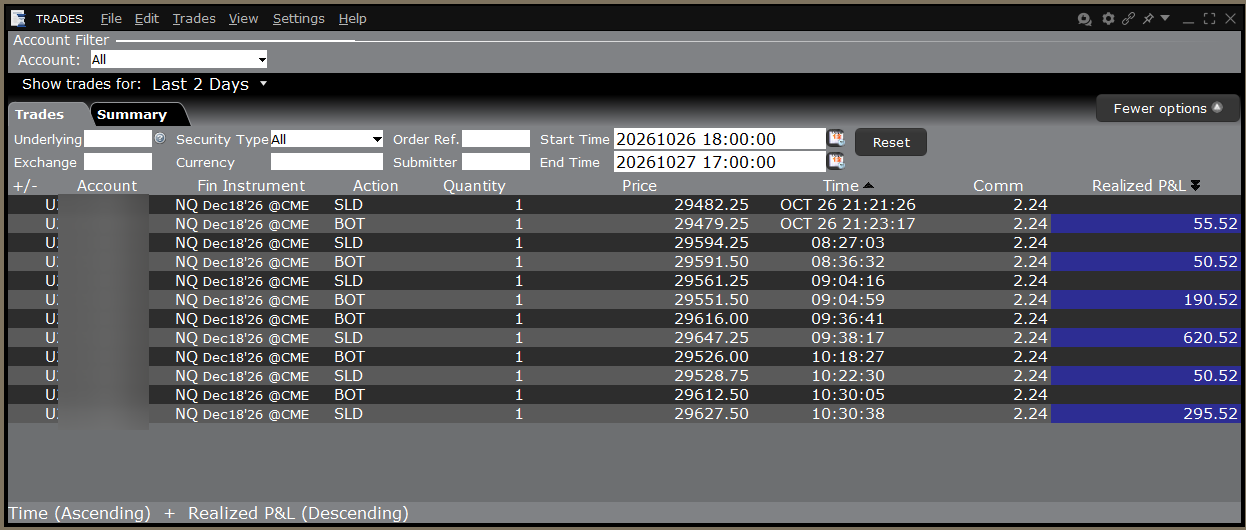
Today was a better day. I still choked a couple, but managed to let some go to TP. Those $50 trades were choked. It drove me nuts! I also dug out a couple of old Stream Decks from a closet and set one up. (I used to own an IT/MSP and have a dozen of these.) It will take time to get this out of my head. I think talking on this thread helps.
This is a killer tips! I love it when traders help one another. And that auto-BE template is a legit hack!
I love that this thread helps - I literally always do better after I talk out an area I am currently struggling on with someone who gets trading. Understands the conversation and experience of it. Then you can say what is happening and often we know what we are doing right and what we need to face head on. I think that is a big part of this conversation for you too! Just bouncing it out of your head and into the world for a minute and then it is more easy to tackle.
Some of them making it to target on a day you still choked a couple is a step forward. One thing to check on the Stream Deck: it sends the keystroke to whichever window has focus, so test your flatten button on Sim with NinjaTrader in front, and again after clicking into another app. For the choking, try a simple daily count of stops you moved early versus stops you left alone. That gives you a number to watch instead of a feeling about how the day went.